Certification of Sustainable Tourist Destinations and Territories
Thematic newsletter
Newsletter #18 . April 2021
DOWNLOAD PDFEditorial
One year has passed since the release of Quaternaire Portugal’s latest newsletter, just a few weeks prior to the beginning of the COVID-19 pandemic. We are back with a new one dedicated to the subject of tourism, and more specifically, to the certification of environmentally sustainable territories and tourist destinations.
No doubt this was a demanding period for our company, which strove to adapt through resilience and flexibility to the constraints set up by this pandemic crisis. As we proceeded with ongoing projects, we meanwhile also embraced new challenges. In a future release, it’s our aim to share with you the most relevant public intervention projects, studies and initiatives we took part in.
We dedicate the first newsletter of 2021 to tourism – a sector of the economy that has suffered a great deal under the COVID-19 pandemic, as a result of a considerable reduction in international demand. Consequences in the tourism sector have been widely felt: they encompass its whole chain of value (travelling and accommodation, tourist entertainment and stimulation, event management, catering, etc.) and they will most probably still last for some time – as uncertainty is still very much present.
From the context of breakdown and cessation of activities, a practice of reflection and a will to upgrade came to the fore within the tourism sector. The post-pandemic context will certainly present a particular challenge to tourism destinations, that of business certification in Sustainable Tourism. It is no minor task for ventures, to adopt new and innovative methodologies and to reshape activities and business models to provide an answer in all fields of sustainability (environmental, economic, social and cultural).
Quaternaire Portugal, whose team’s profile is characterised by technical and scientific diversity as well as by a manifold portfolio of projects, aims to be a partner in the transition processes to a Sustainable Tourism. Quaternaire Portugal provides technical support to tourism organisations/companies, and assists them in the conception and development of their certification processes as sustainable tourism destinations. Moreover, Quaternaire Portugal’s partnership with TecAmbiente, Lda joins both companies’ expertise in designing and accomplishing certifications for sustainable territories and tourism destinations.
The Board
Tourism and territory: integrated approaches based on a perspective of sustainability
In over its thirty years of activity, Quaternaire Portugal has been progressively focusing its efforts on the planning and implementation of projects that aim to promote a comprehensive approach to territorial development. In this context, the promotion of endogenous resources, particularly the territory and community’s distinctive assets, has been a primary focus. The multi-faceted nature of Quaternaire Portugal’s members, whose personal experience, profile and professional trajectories complement one another, is a valuable asset in the pursuit of the company’s current goals.
In Quaternaire Portugal’s portfolio, one can point out a significant diversity of studies and projects. These projects have always aimed at contributing to the comprehensive integrated improvement and qualification of tourism destinations and local communities, namely through strategic planning, training and improvement of human resources and their skills, the designing of tourism offers in a holistic and sustainable way, or through certification and technical advisory. In the flowing pages, we briefly highlight some examples of the company’s experience in this field so far.
Strategic planning is at the core of Quaternaire Portugal’s activity since its foundation, and this still influences most of the company’s interventions and methodology. Our work in territorial strategic planning is specifically focused on the tourism sector. From many other possible examples, we mention two experiences of tourism strategic planning in which we were recently involved.
Since 2007 Quaternaire Portugal has been collaborating with the Mafra Municipality on the development of its local tourism strategic plan, a document reviewed in 2015 and again in 2020. From the beginning a close collaboration has been sought, both with the City Council’s technical team and with the city’s Municipal Council for Tourism, which include the main entities and stakeholders for tourism in the region. The main goal of these plans was to support the development of a strategy to position Mafra as a tourism destination at a national level. Some qualification and intervention proposals were presented to enhance Mafra’s touristic offer, aiming to achieve a stronger market differentiation, more innovative communication strategies, higher competitiveness and attract new investments.
On a regional level, in the Autonomous Region of the Azores, Quaternaire Portugal recently developed a new revision of the POTRAA (Tourism Planning Program for the Azores Autonomous Region) for the Regional Directorate of Tourism, in partnership with Simbiente Açores. The program aimed at defining strategic options for economic development policies in the short and medium terms, focusing on the tourism sector and on strategies to value tourism activities in this region. These include a better understanding of the changes in tourism markets at an international level, and the safeguarding and promotion of natural and cultural resources in the region.
Regarding planning and conception of tourism products and tourism experiences, we refer to the Design and Implementation of a Catalogue for tourism experiences around Alentejo and Ribatejo’s Intangible Cultural Heritage, developed for the Regional Authority for Tourism of Alentejo and Ribatejo. Its objective was the enhancement of tourism offer, through differentiated tourism proposals, based on the territory’s intangible cultural celebrations, to be aligned with international tourism demand. The development of new products and tourism experiences took into consideration tourists’ wishes, the geographical distribution of immaterial cultural celebrations/festivals and thematic coherence with different kinds of local heritage. Currently, this project is at an early stage of implementation.
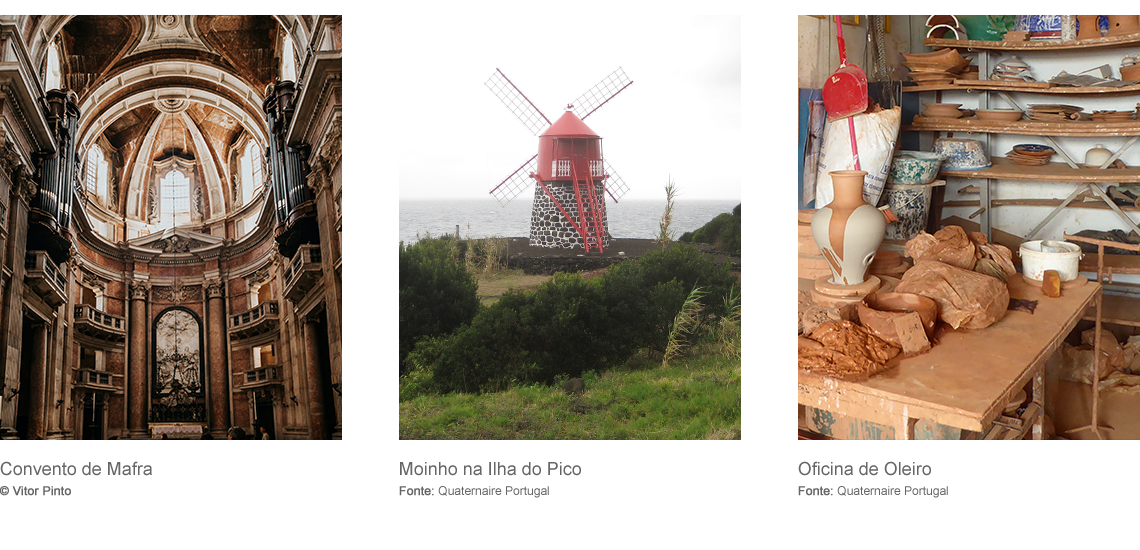
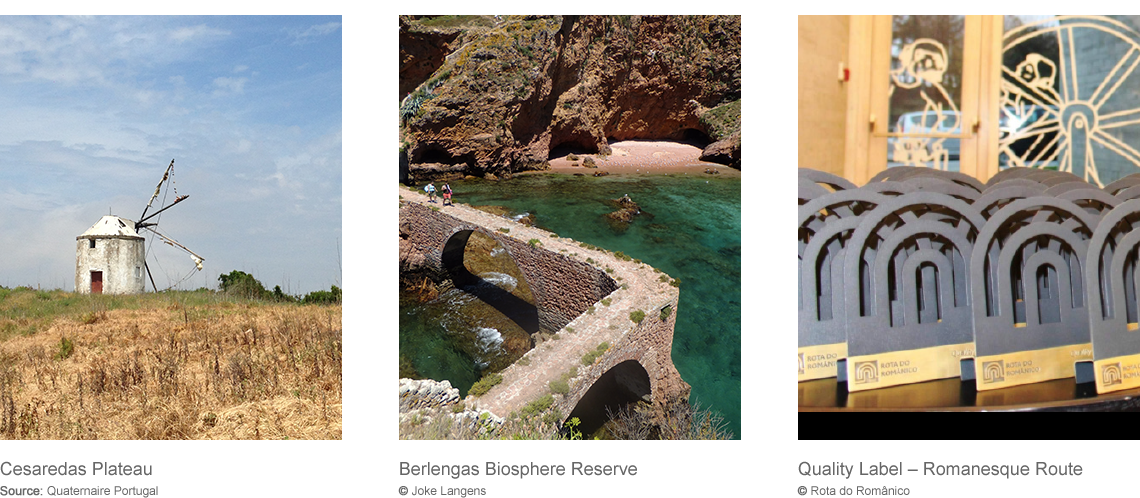
Another interesting example is the Study for the Creation and Implementation of New Thematic Routes in the Cesaredas Plateau, developed by Quaternaire Portugal for the West Inter-municipal Community (CIM Oeste), a territory shared by the municipalities of Lourinhã, Óbidos, Peniche and Bombarral. Three routes were designed in this context, which cross the territory and establish a new touristic product of the region. They promote the visit and fruition of existing natural, historic and cultural assets, and aim to increase the visibility of the Plateau, as well as to enhance the West’s appeal to visitors. This study started off with an analysis of the existing patrimonial assets, and the understanding of the local dynamics and supporting infrastructures in the Plateau region. On a second stage the main objectives were thus defined, which led to the development of interpretative content, the design of routes and a communication plan, and the prediction of future interventions.
On a broader approach, we highlight the Biosphere Reserves: Sustainable Territories, Resilient Communities project, financed by EEA Grants Portugal, under Quaternaire Portugal’s coordination. This project encompasses a multidisciplinary partnership with public and private institutions, at national and international level (Iceland and Norway). The project strives to enhance knowledge, visibility and the promotion of Portugal’s 12 UNESCO Biosphere Reserves, distributed across the country and its autonomous regions. UNESCO Biosphere Reserves play a major role in the implementation of a sustainable policy in these territories, based on their cultural and environmental assets. The project includes strengthening and empowering actions in a broad sense, both for territory and communities alike, such as the pursuing of strongly inclusive approaches at institutional and governance levels, and the fostering of training and education. It is worth mentioning the relevance of this project in research, planning and promotion of natural and cultural heritage and in encouraging local-based entrepreneurship.
A number of specific studies for training and qualification of human resources in the tourism sector were already carried out by Quaternaire Portugal. Better Competences, Better Tourism, produced for the Portuguese Confederation of Tourism, is one example: it summarises which strategic job positions will be crucial in the future, and according to this analysis, it proposes improvements on the sector’s learning and competence certification processes.
Lastly, we feature Quaternaire Portugal’s experience in the creation and development of a Certification System for Tourist Products and Services of the Romanesque Route, currently fully implemented. The Romanesque Route is one of country’s most relevant cultural tourism products, and it is highly held nationally and internationally, as it is evidenced by numerous awards received over the years. Previously, there was a somewhat heterogeneous quality of cultural offer in tourism associated with the Route, specifically related to products and services. The introduction of the aforementioned certification system was the solution to face this challenge. One of its outcomes in particular was the introduction of the “Quality Label – Romanesque Route”, a registered trademark that ensures the quality of products and services along the route, such as in tourism ventures, food and beverage businesses, producers and local products suppliers. A ceremony on the Certifications and Labels of Quality for the Romanesque Route’s System is annually held.
Sustainable tourism and destination certification
The 1992’s Earth Summit held in Rio de Janeiro introduced the concept of Sustainable Development in tourism. Consequently, Sustainable Tourism was defined as tourism that preserves the environment and its natural resources, promotes economic growth, considers travellers needs, the industry, and those of present and future generations. On the other hand, the World Charter for Sustainable Tourism, published in 1995, highlighted the impact of tourism in different areas, such as in the environment, the economy, local communities and destinations, and embraced an ethical and social approach. Later, in 1999 the World Tourism Organization published the Global Code of Ethics for Tourism and proposed a responsible and sustainable approach to this activity. These are the foundational documents considering the concept of Sustainable Tourism, which includes decision-makers, suppliers, enterprises and tourists.

Certification is a voluntary process and, in relation to tourism, several certifications are available. They encompass specific requirements aiming to improve sustainability. Certification criteria are solidly based in thoroughness, in accordance with legislation and focused on continuous improvement. Certifications are nowadays widely recognized by stakeholders and clients.
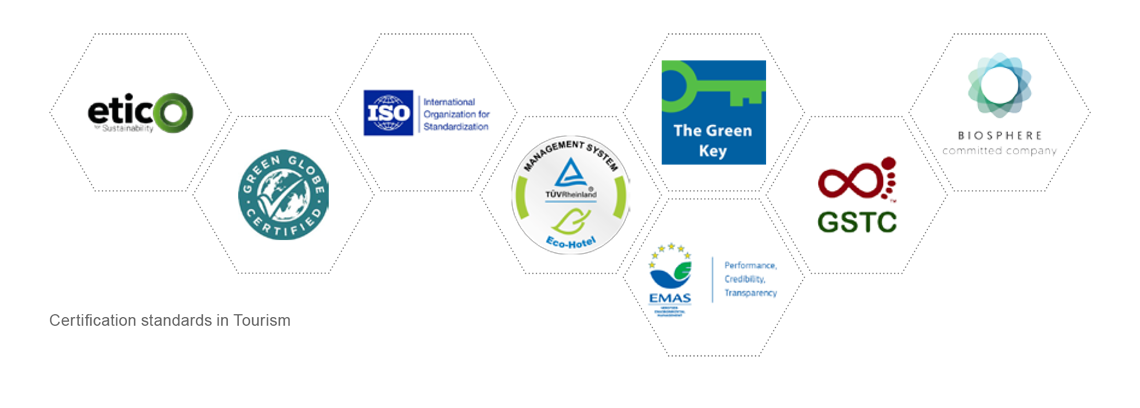
Tourism certification contributes to reduce environmental impacts and improve benefits for local populations, through the increase of fair jobs and working conditions. Furthermore, it contributes to the development of local economies, as they encourage the production and trade of local products, and the wise use of natural, cultural and patrimonial resources, as stated in the Sustainable Development Goals (UN). Certifications are also a competitive leverage for destinations and organizations, committed with good practices and focused on continuous improvement.
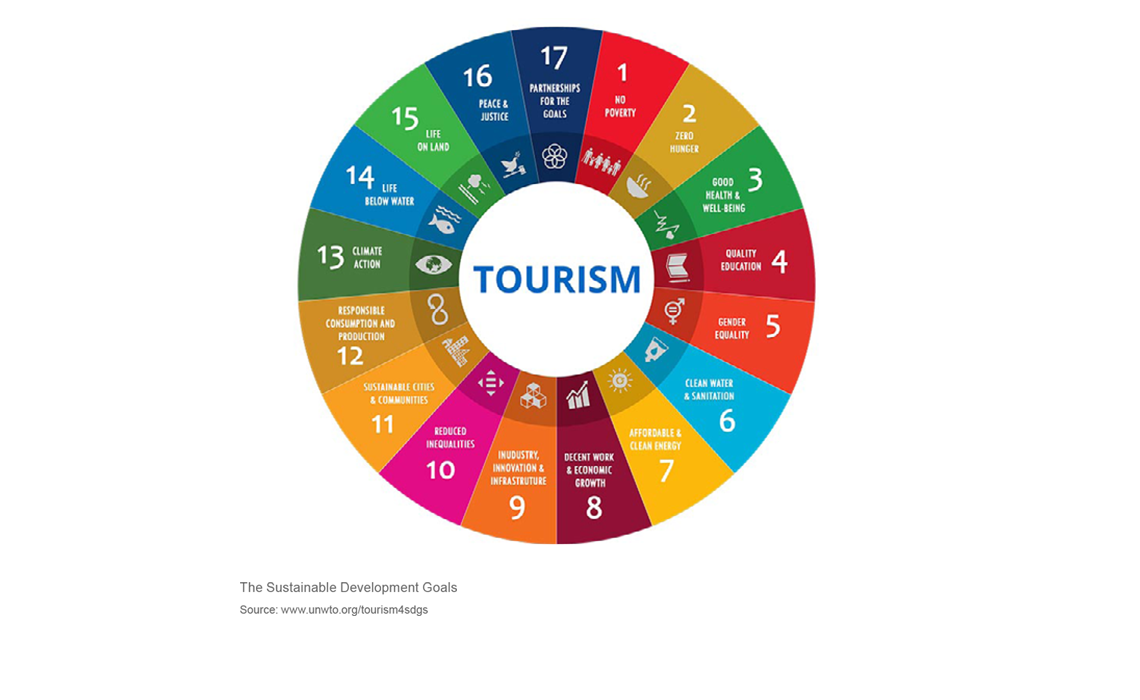
TecAmbiente, Lda cooperates in partnership with Quaternaire Portugal in the design and implementation of sustainable tourism destination certifications. TecAmbiente, Lda is a consulting company founded in 2003 and specialised in all areas of environment and sustainability, such as environmental management, sustainable tourism, biodiversity and nature conservation, protected areas, Environmental Impact Assessment, audits and training/qualification. Through the ‘ETICO for sustainability’ standard, designed for all sectors of human activity, we help organizations implement internal good practices and achieve a Sustainable Tourism certification. Simultaneously, we promote an integrated approach on sociocultural, environmental and economic levels, according to the Sustainable Development Goals and the Agenda 2030.
Sustainable tourism certification in Portugal
There is still a weak adherence to certification processes in tourism in Portugal. Reasons can be mentioned to justify this situation, such as companies’ size, the lack of management competences, the underestimation of certifications, among others. Notwithstanding, market’s demand has demonstrated certification to be a main asset for a tourism business or destination. Examples of the aforementioned are the Historic Villages of Portugal, the Baião Municipality and the Azores Archipelago, certified as Sustainable Destinations. The Region of Alentejo is currently under its own certification process. On the other hand, to minimize the overwhelming impact caused by the COVID-19 pandemic, Tourism of Portugal introduced its own Clean & Safe Label, related with hygiene certification in tourism.
Certification methods and advantages
Methodologically, a certification introduces new procedures in business, aiming at environmental, sociocultural and economic performance improvement in tourism destinations. It provides the best solutions, based on ethical and excellence standards, striving towards the fulfilment of expectations of tourists, business and local population.
A tourism destination’s certification begins with the establishment of a formal commitment between the destination’s managing authorities and the certification entity. This is a participative process that fosters local and regional partnerships. It includes local stakeholders, local population, teaching institutions, research centres, public authorities and decision makers.
The main benefits of the certification process are:
-
Improve region´s, companies and product positioning;
-
Territory competitivity reinforcement, of tourism detinations, of business, companies and staff;
-
Improve tourism destinations environmental sustainability, through wise use of natural resources, waste reduction, gas emissions and noise, among others;
-
Introducing the best practices in organisations, improving internal management and competitiveness;
-
Local communities well-being improvement;
-
Human resources training and capacitation, team’s performance enhancement and fullfilment, destination attractiveness;
-
Reinforcement of tourist destination positioning, marketing tool, improving customer satisfaction;
The table bellow seeks to evidence potentialities and expectations for each territory and its communities.