
Quaternaire Portugal contributing to development since 1990
Newsletter #17 . April 2020
DOWNLOAD PDFEditorial
“This time it is different.” We have heard it again and again. We heard it in 2007- 2008 and in particular when, with the usual delay, we felt the strongest impact of the sovereign debt crisis from 2011 onwards. And we have also heard it in some of the more critical presentations of the climate emergency. But in thirty years of Quaternaire Portugal at the service of development, the people who move this company forward every day have never faced a challenge of this magnitude. And so much uncertainty. This is why it is very likely that “this time it really will be different”. We have no recent memory of pandemics and health crises on this scale. Only in historical curiosities from archives of the past can we find echoes of other pandemics. But it is impressive the confrontation in terms of incidence, speed of spread and mortality. And we cannot fail to recognise the fragility and vulnerability of what until a month or two ago seemed indisputable to us: the models of consumption, the forms of social coexistence, the organisation and vibrant life of cities, the trips to the farthest corners of the world and the much desired tourist short-breaks, globalization and the controversies it has always drawn and even the organisation of our own work. Uncertainty has fallen on virtually all those givens. The very sovereignty of economic life reveals all its fragility and vulnerability, broken after all by a cultural practice, also far away for us, which we have difficulty in understanding - the consumption of wild animals for food. We are therefore immersed in a dual crisis, that of health, which is lethal and threatening, and the brutal dimension of the economic crisis, with which the first and the containment strategies to combat it interact. The recession ahead of us will be deep, although we are not yet able to anticipate its duration, intense but limited to one or two quarters, or longer in duration. We do not know. But it is certainly a recession that will manifest itself in the world economy and, like the pandemic, is spreading. Economists call it a synchronous crisis. In other words, it will be practically impossible to find an economy that is not in recession. This means that, via the market, there will be no economy that can stand on its own the decline in world demand. It is a simultaneous supply and demand crisis. It is a crisis that, generating an immense inequality, happens at a time when inequality had already reached levels never before seen among the most developed economies. A crisis that is taking place in a world already characterised by various threats to Western-style democracies, with populist tensions which, like the virus, find a fertile environment for their dissemination. And it will also hit the poorest countries hard. At the time of writing this newsletter, Portugal seems to have found in good time an approach to the health crisis that will have avoided the worst in terms of pressure and burden on the public health system. It is already possible to assess the incidence of the pandemic in the national territory, which includes mainland Portugal and the Autonomous Regions. Surely the impact of the economic downturn will be territorially more widespread than that of the spatial distribution of cases of infection and mortality. In the run-up to a new period of Structural Funds programming, the starting context for the territories will change substantially. And the final phase of the commitment and implementation of the 2014-2020 programming, still in progress, will be allocated, in terms of priorities, to mitigating the health and economic effects of the pandemic. A company like Quaternaire Portugal, with such a solid and diversified contribution to the development of territories and institutions, cannot fail to respond to the challenge posed by the pandemic and the changes it will bring about:
First, by reorganising its work processes to respond civically to the decisions of confinement and its future flexibilization;
Second, working in partnership with its main clients to assess the major changes in the territorial contexts at economic, social and cultural level and to devise planning and ways to mitigate these effects;
Third, by investing in the production of knowledge on the major changes that the post-pandemic could bring about, such as new paths for tourism, the impact on the organisation of work and the necessary skills, the land- use organisation and planning for greater resilience of the populations, the mitigation of the international exposure of territories to the value chains imposed by globalisation, distance learning and training methodologies, the reinvention of ways of linking small agriculture to the market, a new look at the climate emergency, the effects on consumption and cultural practices, and new perspectives on housing.
In future newsletters we will report on our progress in this context of uncertainty. The rational remains the same: to contribute proactively to the challenges of development in the indetermination of the future.
António Manuel FigueiredoHead of Strategy and Innovation
Company activity
Some highlights of Quaternaire Portugal’s activity in the scope of the different studies and projects under development or recently concluded.
Advice on the Review of Mafra’s Education Charter
Training and Education Systems and Expertise
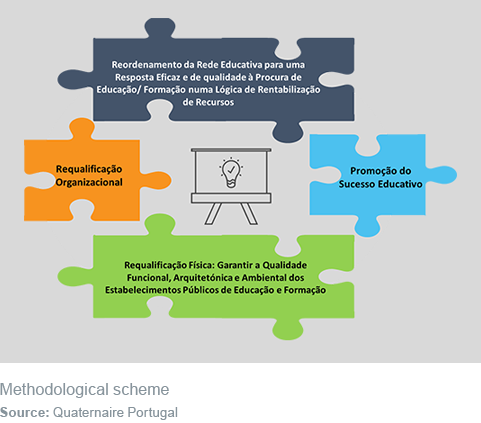
Quaternaire Portugal is carrying out the Review of Mafra’s Education Charter. The main objectives are: i) to prepare, together with the Municipality, the review of the Education Charter carried out in 2005, approved in 2006 and reviewed in 2013, configuring it as a strategic instrument for the planning of the network of equipment and services devoted to the school population; and ii) to define the strategic guidelines and areas of intervention in terms of education policy.
The process of renewal of the local education network, embodied in proposals that enable an effective response to the demand for education/training and that promote the rationalisation of resources, should be complemented by a set of measures to guide the development of a municipal educational strategy focusing on promoting educational success.
This process should be based on the guarantee of functional (spaces and equipment), architectural and environmental quality and diversity of spaces for the development of various skills in public education and training establishments.
Mid-term evaluation of the Azores 2014-2020 Operational Programme
Evaluation
In January 2020, following a public tender, the Mid-term Evaluation of the 2014-2020 Azores Operational Programme (Azores OP) was initiated. The Azores is a region in which Quaternaire Portugal has been carrying out extensive work in the area of land-use planning.
From the point of view of the object and methodology of evaluation, the Azores OP represents an interesting challenge for the following main reasons: (i) it is a complex and diversified programme with 12 priorities, 11 of which are included in the object of the evaluation; (ii) it is a multi-fund programme (ERDF and ESF); (iii) it involves as beneficiaries and intermediate entities for the implementation of the OP a very diversified set of entities from the Regional Government; (iv) it places demands on a wide range of entities to inquire, from the final beneficiaries of social policies to enterprise beneficiaries.Currently suspended due to the incidence of the Coronavirus crisis, the evaluation will be carried out by the Quaternaire Portugal team with the attention and competence that its complexity demands.
Diagnosis of intermediate qualification needs - updating of regional diagnosis and sector deepening
Training and Education Systems and Expertise
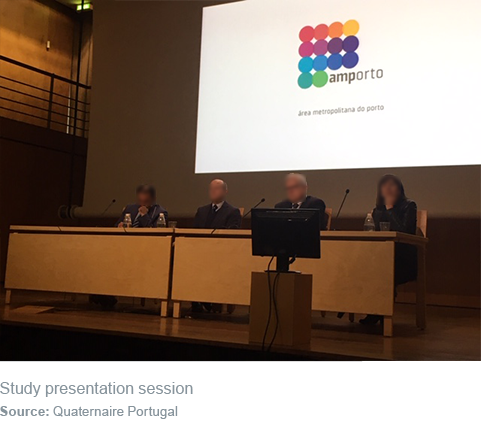
This study is part of the intervention of the Oporto Metropolitan Area in supporting the planning and coordination of the vocational education network for young people, which began in 2016 and which, at this stage, seeks to consolidate its action and the information that is made available to agents involved in the management of the regional vocational education network.The work began in the last quarter of 2019 and was concluded, with the empirical data collections and analyses and the production of the final report, during the first months of 2020.
The coincidence of this closing phase of the study with the emergence of the COVID 19 health crisis and its inevitable effects on economic activity and the labour market has given rise to further reflection by the Quaternaire Portugal team, which will consider this new reality in its conclusions and lines of proposal.
Energy efficiency strategy for the University of Aveiro buildings
Economic and Social Development
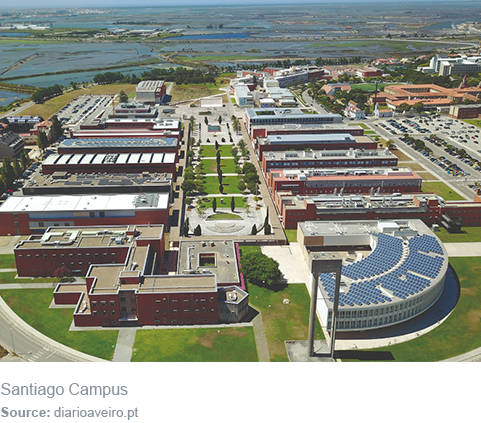
This project, recently initiated by Quaternaire Portugal, with the collaboration of SOPSEC - Sociedade de Prestação de Serviços de Engenharia Civil, S.A, focuses on the various University campuses (Aveiro-Santiago, Aveiro-Crasto, Águeda and Oliveira de Azeméis).It aims to define a strategy for the promotion of energy efficiency, underpinning a structured investment in reducing energy consumption, greater use of renewable energy sources, increasing the hygrothermal comfort and functionality of buildings (and of each campus in general), as well as reducing vulnerabilities to any irregularity or failure in energy supply.
The implementation of this strategy should achieve significant results in terms of financial costs (reducing them and making them more predictable), greenhouse gas emissions (contributing to decarbonisation and the quality of the urban environment) and the overall quality of the University’s facilities, in addition to the Institution’s own image.
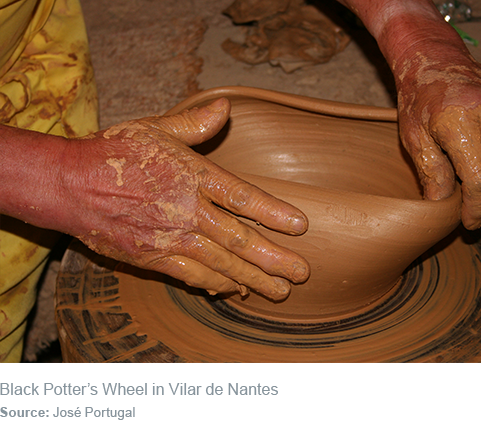
Diagnostic Study for the Protection and Promotion of Traditional Arts and Crafts
Economic and Social Development
The Directorate General for Economic Activities has awarded Quaternaire Portugal the diagnostic study for the protection and promotion of traditional arts and crafts which aims to establish the bases for the definition of a set of public policies for the promotion of arts and crafts, acting throughout its value chain, resulting in the improvement of competitiveness, both in the productive and commercial dimensions.In Portugal, these activities correspond to a fragile economic fabric, with some areas in which craftsmen have a high average age, made up of micro-companies with capital difficulties and weak professional training in the areas of business and commercial management, technological innovation in production, and aesthetic and artistic training indispensable for production innovation, among others.This is a sector that cannot be judged solely by its economic performance, because it plays a social and cultural role that must be recognised and from which the activity must clearly benefit in terms of the support it is given, which will be no more than the reward of the social expectation it is given.
This study will be a rare opportunity to diagnose the sector and propose concrete actions to strengthen it, extending its economic, cultural and social importance.
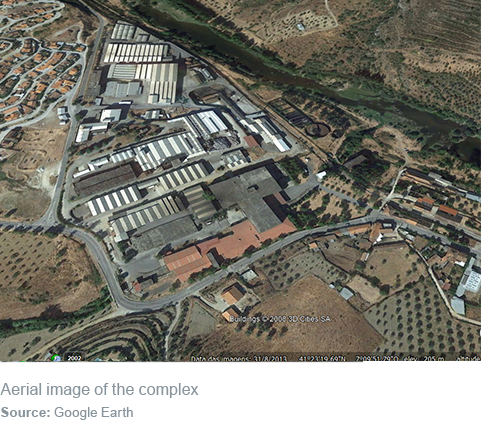
Strategic Plan for the Cachão Agro-Industrial Complex
Economic and Social Development
The Cachão Agro-Industrial Complex (CAICA) can already be considered a mythical project in the aspirations for development of the Lands of Trás-os- Montes sub-region, since the initial installation of its physical infrastructure in the 1960s, under the leadership of Camilo Mendonça. From the initial years of its implementation to its current state, CAICA has experienced moments of relevant occupation alternating with periods of crisis, up to the present day in which the viability of its revitalisation and possible reformulation of its functional and organisational model is re-discussed.
Quaternaire Portugal was invited to conduct an in-depth study on the infrastructure, economic, functional and organisational conditions for the revitalisation of CAICA by the Intermunicipal Community of the Lands of Trás-os-Montes, which involves:
(i) the evaluation of the investment threshold for intervention in infrastructure so that revitalisation is feasible; (ii) the study of functions likely to be competitively assumed by the revitalised complex within the framework of the economy of the area of influence; (iii) the potential for attracting activities to the new infrastructure; (iv) the organisational model; (v) and a set of structuring projects likely to be financed within the framework of the North Regional Operational Programme and other programming instruments.On this project Quaternaire Portugal counts with the specialised collaboration of Sigma Team Consulting.
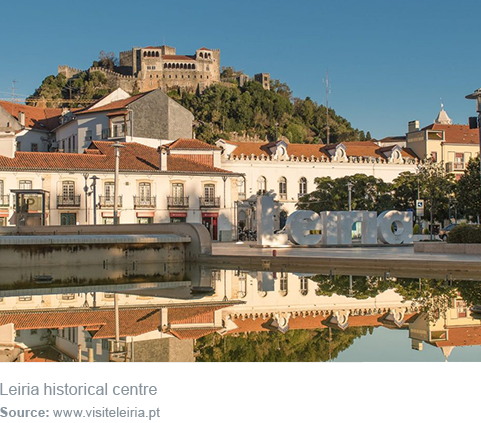
Leiria Strategic Plan for Culture
Economic and Social Development
At the beginning of 2020, Quaternaire Portugal was hired by the Municipality of Leiria to prepare its Strategic Plan for Culture. This work is part of the ongoing process of preparing Leiria’s application to become European Capital of Culture in 2027.
This is a planning exercise that is intended to be widely participated. It mainly aims to set out and outline a strategy for the next decade, considering a set of vectors and projects that aim to boost and strengthen the cultural and creative sector in this municipality. This process aims, at the same time, to ensure the conditions for culture to become an essential element in the sustainable development process of Leiria, in addition to strengthening social, identity and territorial cohesion in the regional area where the city is located. This Plan thus fits into the wider context in which Leiria, together with 25 partner municipalities, has been working on the constitution and promotion of the 2027 Culture Network and which culminates, at the end of 2021, with the expected delivery of the application to become European Capital of Culture (first national phase).At the moment, the methodological framework has already been defined and duly validated by the City Council and the Quaternaire Portugal team is in the field, in a phase of diagnosis of the local cultural and creative system. It is likely that the work will be completed by the end of 2020 and that, during this period, various moments of dissemination of the work and of interaction and collaboration with the actors and the community will take place.
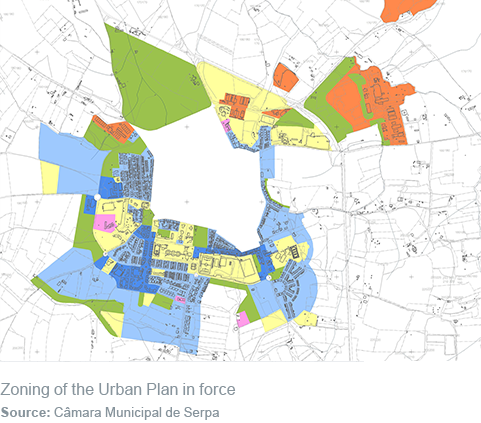
Land-Use Planning State Report and Review of the Serpa Urban Plan
Territory
Quaternaire Portugal was hired to provide services to the Municipality of Serpa encompassing two products: the preparation of the Land-Use Planning State Report (REOT) of Serpa and the review of the Serpa Urban Plan, for which it was technically responsible in the past.The REOT, which has since been approved, is the document that underpins the review of the Municipal Master Plan (PDM).
It takes stock of the various municipal territorial plans in force, in particular the PDM, identifying their level of implementation and some needs for adjustment of the main elements - regulation and zoning plan - in accordance with the guidelines in the new legal framework. In addition, the main challenges facing land management are analysed and the terms of reference for the review of the Serpa PDM are proposed.
The review of the Urban Plan is still at an early stage and its main objective is to adjust the plan to one of the main changes that the legal framework underwent in 2014 - the elimination of land for development.
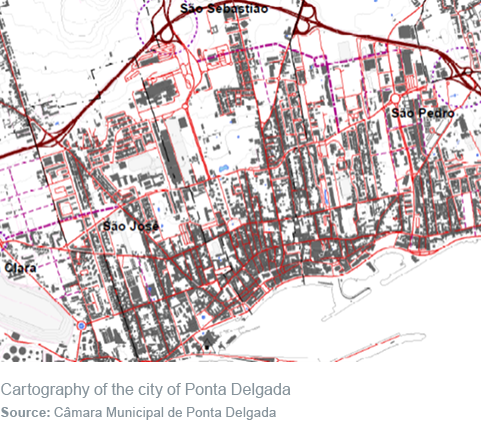
Ponta Delgada Municipal Master Plan Review
Territory
The Municipality of Ponta Delgada intends to review its Municipal Master Plan (PDM), which has been in force for a little over a decade. It will be updated according to: i) the current social and economic dynamics of the municipality, reinforcing the competitiveness of the municipality; ii) the guidelines of a set of instruments and national, regional and municipal strategic benchmarks; iii) the options of the new legal framework namely in terms of soil classification; and iv) the various needs for material correction and optimisation of the plan.
Quaternaire Portugal was hired for this project and is currently concluding the Land-Use Planning State Report of Ponta Delgada.
It is effectively a territory regarding which the company has in-depth knowledge, since it has collaborated in the preparation of the PDM in force, coordinated the Regional Land-Use Plan of the Azores, as well as the Coastal Zone Plan of the island of S. Miguel, which covers the southern sector of the municipality, among other studies.
Quaternaire Portugal
Quaternaire Portugal, Consultoria para o Desenvolvimento SA is a corporate society created in 1990 and working on the following fields of expertise: Evaluation; Culture; Employment, Competences and Vocational Training; Strategic planning; Spatial Planning; Urban Projects and Policies.
Our approach integrates the development of territories with the improvement of capabilities of private and public organisations. We aim to produce solutions that fit the specific needs of clients and to generate and diffuse pertinent strategic knowledge.
In doing so, our multidisciplinary and increasingly qualified group of full time consultants regularly interacts with a network of high-skilled and well known national and international shareholders as well as with a regular and flexible group of external advisers in various fields of expertise.
Matosinhos
Rua Tomás Ribeiro, 412 – 2º 4450-295 Matosinhos, Portugal T.: +351 229 399 150 F.: +351 229 399 159geral@quaternaire.pt
Lisboa
Av. 5 de Outubro, 77 – 6º Esq. 1050-049 Lisboa, PortugalT.: +351 213 513 200 F.: +351 213 513 201